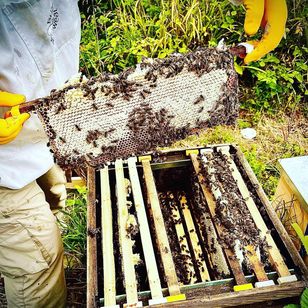
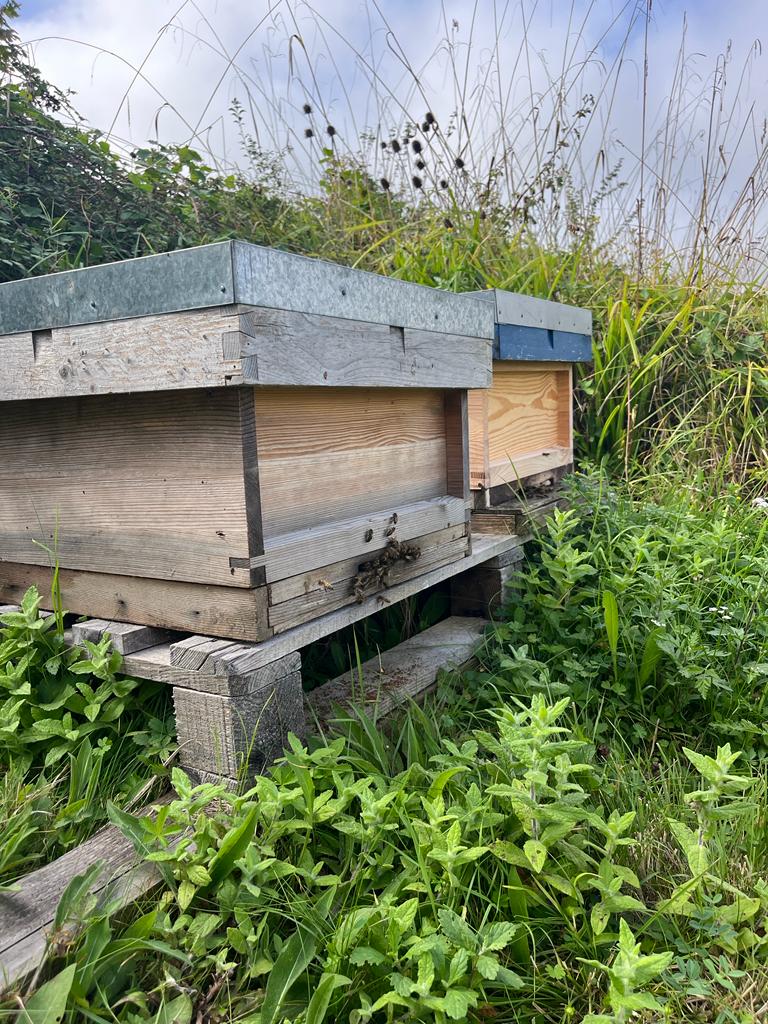
A honeybee hive is a complex and organized structure that serves as the home for a colony of bees. The inner workings of a beehive involve specific components and the division of labor among the bees. Here’s a general overview:
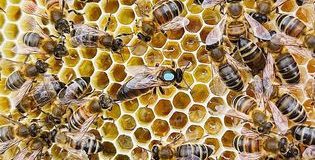
Bees:
Queen bee: The queen bee is the largest bee in the colony and has the primary role of laying eggs. She is responsible for the reproduction of the colony.
Worker bees: Worker bees are female bees that perform various tasks within the hive. They are responsible for tasks such as cleaning, nursing the brood, collecting nectar and pollen, building and maintaining the hive, and defending the colony.
Drones: Drones are male bees whose main function is to mate with a queen from another colony. They do not have stingers and do not participate in other hive activities.
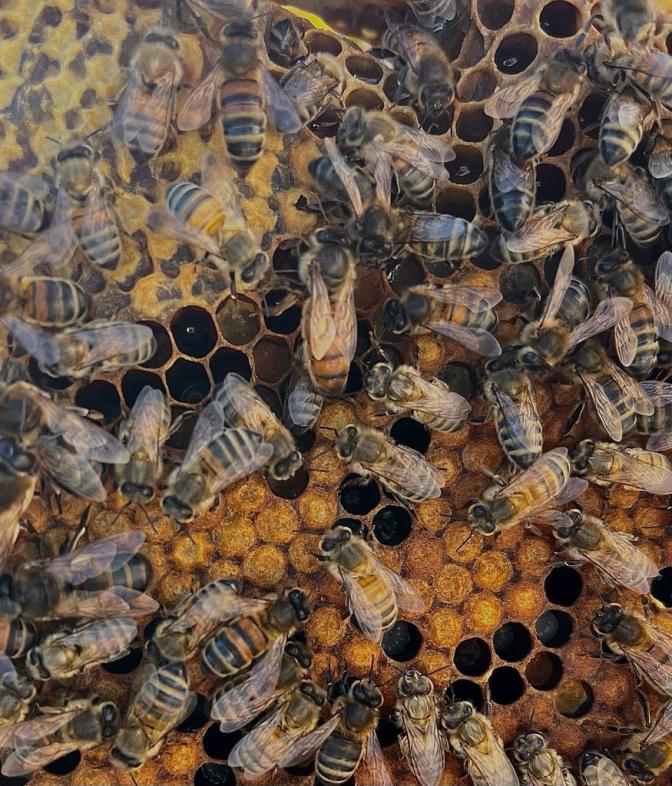
Hive Components:
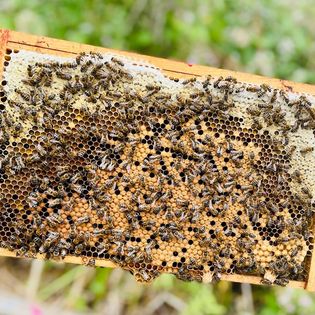
Brood chamber: The brood chamber is where the queen lays her eggs. It contains cells where the eggs are deposited, and the larvae develop and pupate into adult bees.
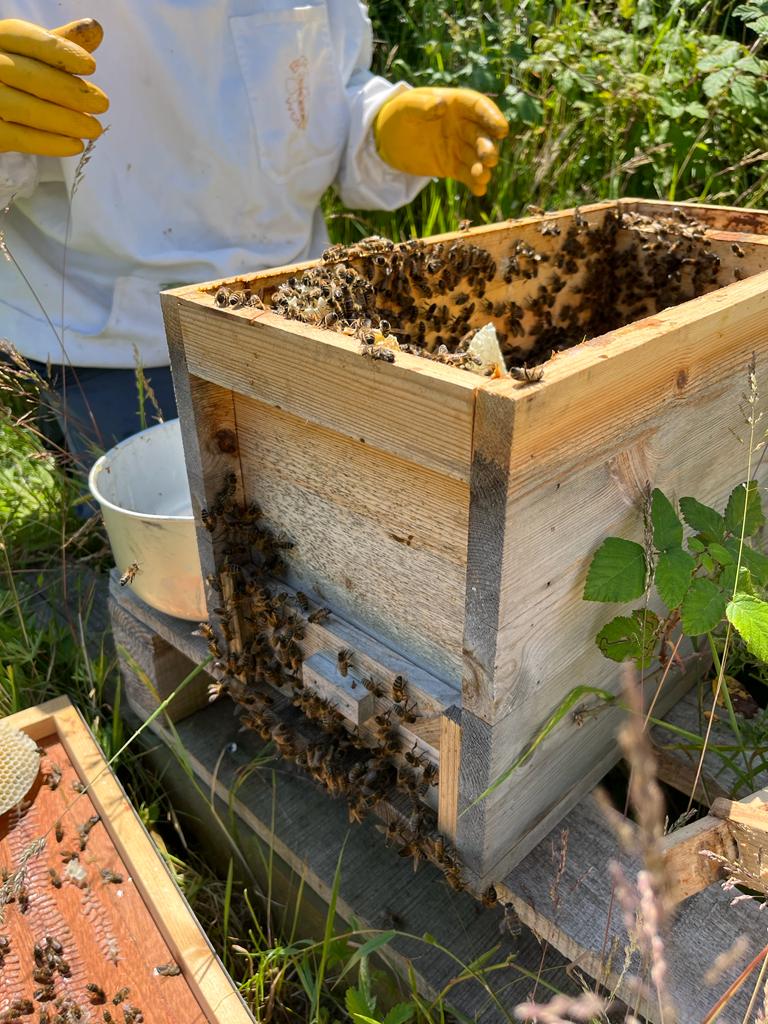
Honey super: The honey super is an additional chamber placed above the brood chamber. It provides space for the bees to store surplus honey. This is the area from which beekeepers typically harvest honey.
Frames and comb: Within the brood chamber and honey super, frames with beeswax comb are placed. The bees build comb on these frames, which serves as a foundation for storing honey, raising brood, and storing pollen.
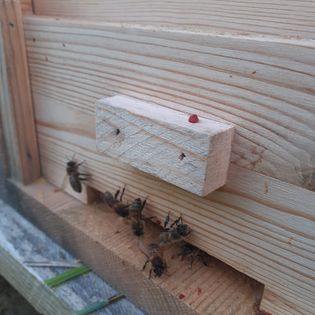
Entrance/exit: The hive has a small entrance through which bees enter and exit the hive. The entrance may be guarded by worker bees to defend against intruders.
Ventilation: Bees regulate the temperature and humidity within the hive. They may use small openings or vents to control airflow and maintain optimal conditions.
Hive Activities:
Foraging: Worker bees venture outside the hive to collect nectar, pollen, water, and propolis (a resinous substance). They communicate the location of food sources to other bees through a waggle dance or pheromones.
Honey production: Bees convert nectar into honey by regurgitating and evaporating water from the nectar. The honey is stored in cells within the comb for future use as food.
Pollination: As bees collect nectar, they inadvertently transfer pollen from flower to flower, facilitating pollination—a vital process for plant reproduction and the production of fruits and seeds.
Hive maintenance: Worker bees maintain and clean the hive by removing debris, repairing damaged comb, and regulating the hive’s temperature and humidity.
Brood care: Worker bees tend to the developing brood, feeding them a mixture of pollen and nectar called “bee bread” and providing warmth and protection.
The activities and organization within a beehive are highly intricate and cooperative, allowing the colony to function efficiently and thrive.
 Blossoms Bees Honey and Bee Products